
September 9
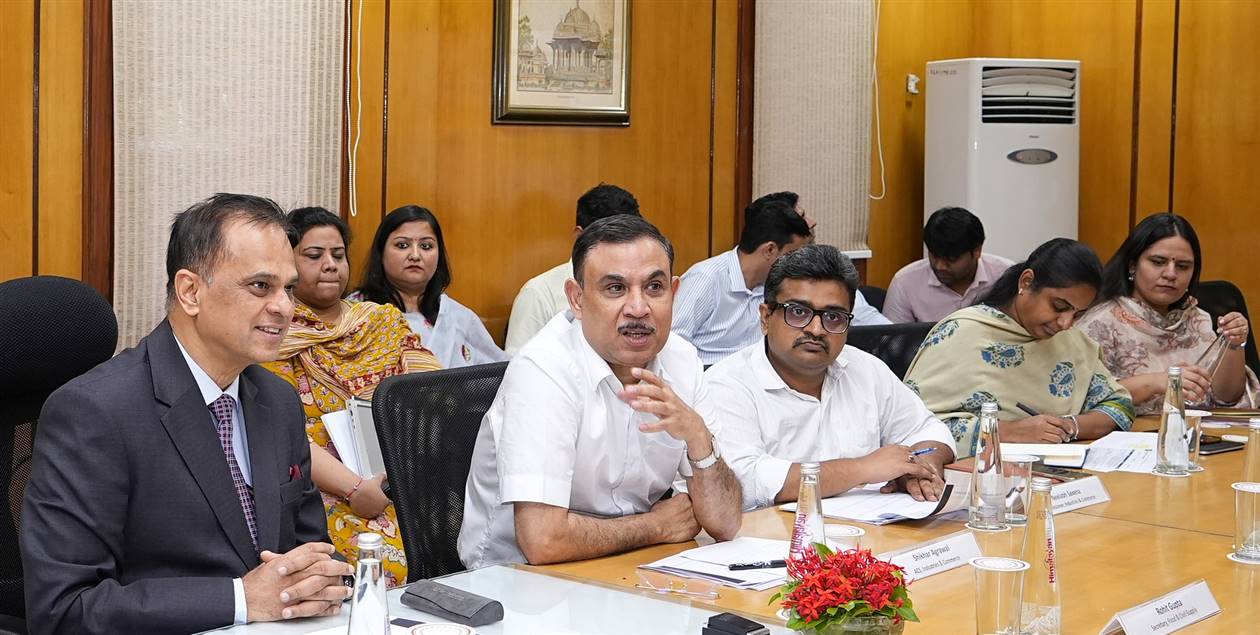
A review meeting on the implementation of 28 priorities related to economic, regulatory and procedural reforms identified at the Fifth Chief Secretaries’ Conference convened by the Government of India was held on Wednesday under the chairmanship of Chief Secretary Shri V. Srinivas.
Additional Chief Secretary, Industries & Commerce Department, Shri Shikhar Agrawal; Principal Secretary, Finance Department, Shri Vaibhav Galariya; Principal Secretary, Revenue Department, Shri T. Ravikanth, along with senior officers from the concerned departments, attended the meeting.
It was informed that, out of the 28 priorities identified by the Government of India, 22 have so far been completed in Rajasthan, while work on the remaining six priorities is underway. With 22 priorities successfully implemented, Rajasthan has emerged as the leading state in the country in their implementation.
Chief Secretary Shri V. Srinivas directed the officers to ensure the early completion of the remaining six priorities through effective coordination and cooperation among the concerned departments. He also directed officials to take effective measures towards simplification of rules, reduction of unnecessary provisions and deregulation to make doing business easier in the state and accelerate investment and economic activity through effective reforms.
Key Measures Undertaken for Simplification of Rules
Officials attending the meeting informed that significant measures have been undertaken across various sectors to implement the identified priorities.
Fire safety rules have been reorganised into three categories, with a provision for a single Fire NOC. The process for obtaining electricity connections has also been simplified, with connections of up to 33 KV across all categories being facilitated on the basis of self-declaration.
The documentary requirements for private schools have also been significantly reduced. The number of documents required for recognition has been reduced from 28 to 16, while those required for affiliation have been reduced from 31 to 18.
Other reforms include permission for digital libraries along with physical libraries for Classes 9 to 12, provision of playground facilities in community parks or other available land within 100 metres of school premises, and abolition of the mandatory requirement for an endowment fund.
In the medical sector, the requirement of obtaining an NOC from the medical council of another state has also been eliminated, further simplifying the regulatory process.